
The Zoonoses Program puts science at the service of the 'One Health' approach."
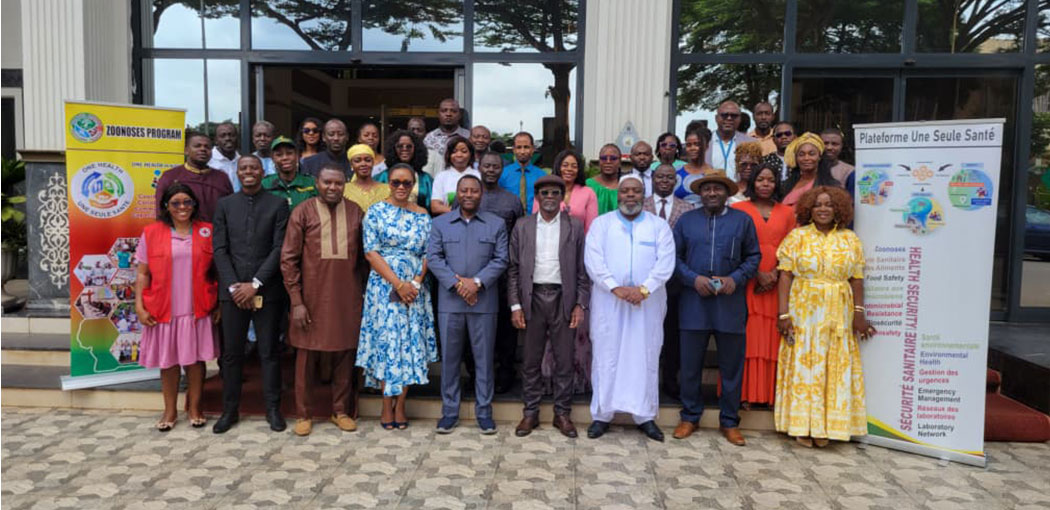
Climate and Health Urgency: Cameroon launches a scientific offensive via the "One Health" approach, aiming to build integrated governance where multisectoral data guides political decision-making
In the quest for effective health governance, high-quality information constitutes the indispensable foundation for any strategic decision. Far from being accidental, such information is the product of a rigorous process of collection and analysis aimed at generating solid scientific evidence. Driven by this conviction, Cameroon—through the Zoonoses Program—convened a multidisciplinary panel of researchers from the human, animal, plant, and environmental health sectors from August 7 to 8, 2025. The objective of this dissemination seminar was to place the One Health vision at the heart of national scientific research, in order to better understand the interconnected factors influencing public health and to guide the country's political and strategic choices with greater precision.
Over the course of two days, the sessions provided an overview of scientific progress in Cameroon centered on the major pillars of One Health, notably: zoonotic diseases, antimicrobial resistance (AMR), food safety, and climate change. Among the key data, figures presented by the ONACC were particularly striking, revealing a national average temperature increase of +1.2°C since 1960. This warming, coupled with increased rainfall variability—primarily in the far north—and a resurgence of extreme phenomena such as floods and prolonged droughts, underscores the urgency of a coordinated, multisectoral response.
In light of the alarming results and the challenges faced, a major outcome of this meeting, beyond the sharing of knowledge, was the concerted definition of priority research themes for Cameroon. Central to these priorities is the development of high-performance multisectoral surveillance mechanisms, which emerged as an absolute necessity. The goal is to streamline data sharing among the various stakeholders of the "One Health" approach. This commitment to breaking down silos highlighted the pivotal role of the Cameroon One Health Information System (COHIS), which aims to integrate and leverage data from diverse sectors for faster, evidence-based decision-making.
Moving forward, the challenge lies in sustaining this dialogue between researchers and policymakers, ensuring that scientific research becomes a genuine lever for public health.